


A reader, a member of the press, recently caught a screening of Aaron Sorkin's "The Social Reckoning."
Some context first. Sony dated "The Social Reckoning" for October 9 a full year out, clearly with awards season in mind. Then came reshoots in Vancouver this summer, with barely three months to go before release. That's cutting it close. Around the same time, two reliable sources told me the Venice premiere everybody was expecting wasn't going to happen. It didn't.
Then there's the Fincher problem, which I've been flagging since day one. Sorkin is directing this one himself, and none of his three previous films, "Molly's Game," "The Trial of the Chicago 7," and "Being the Ricardos," came anywhere close to the obsessive precision David Fincher brought to "The Social Network." Add Alexandre Desplat stepping in for Trent Reznor and Atticus Ross on score duty, and Jeremy Strong taking over Zuckerberg after Jesse Eisenberg passed, and you have a follow-up destined to be compared to its predecessor, at every turn.
So how did it turn out? Here's the reaction:
No, it's not "The Social Network." I know that's what you want to know, so there it is. "The Social Reckoning" is Sorkin directing Sorkin.
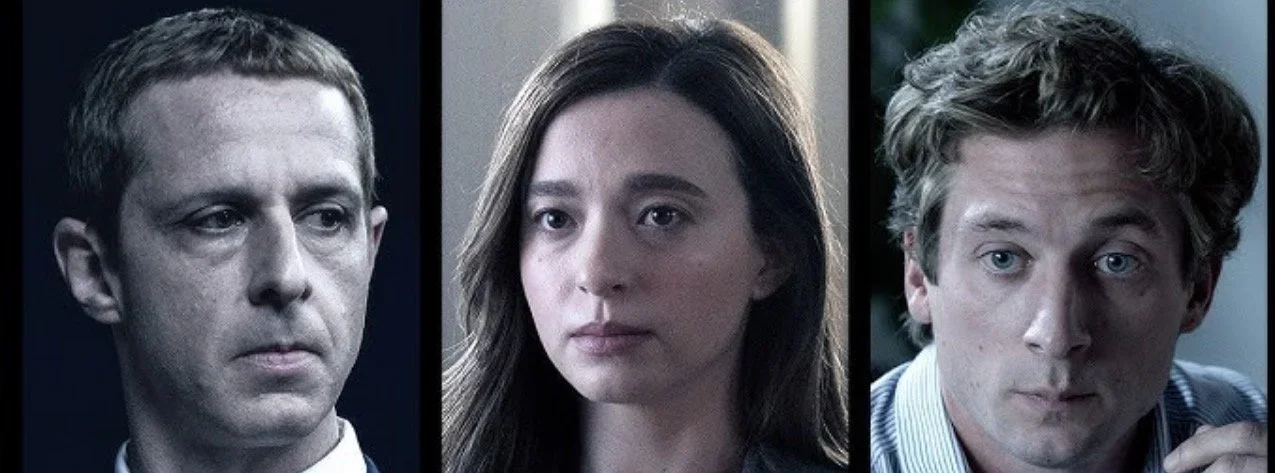
Some of that works fine. The man can still write a scene where two people argue, and there are a few memorable ones here. Mikey Madison is very good, and so is Jeremy Allen White. Honestly, they carry the movie. Jeremy Strong doesn't have much screen time, but he's good as well.
The problem is that Sorkin has never known what to do with a camera, and he still doesn't. Most of the film looks like a very expensive TV episode. I also have no idea what happened with the music. Desplat wrote the score, and I usually love his work, but it's overused, pushing and pushing in scenes where the actors already had things perfectly under control. It got on my nerves after a while.
Sorkin is angry about Facebook and about social media in general, about what it's done to how we vote and how we treat each other. It reminded me of "The Trial of the Chicago 7" in that it very much wants to tell you something, and I suspect the two will be seen as companion pieces.
Throughout, Sorkin shows how hatred, extremism and anger feed off one another, fuelled by Facebook's algorithm, which amplified that kind of viral content, conspiracy theories and fake news included, because it kept users engaged and the platform thriving. As Madison and White dig into the data, they uncover harms Facebook knows about but refuses to address.
January 6th eventually comes up, the entire film builds toward it. The film's arc leads naturally to the suggestion that January 6th was, in part, a product of Facebook itself. That's the culmination of Sorkin's message, that Zuckerberg chose profit over responsibility. Sorkin recreates the Capitol riot in a five-to-six-minute sequence, a bit like the riot scenes in ‘Chicago 7,’ with police officers and gas masks. It's not great visually, though. It looks cheap compared to the ‘Chicago 7’ recreation.
I'm glad it exists. I just didn't think it was very well made.
Pretty much what I expected, to be honest. The visual flatness was always going to be the issue, and the Desplat hire struck me as an odd fit from the start. Good to hear Madison and White deliver, though.
What stands out is how little is said about Strong. His Zuckerberg has been the film's most talked-about element since the first trailer, and Sorkin has spent weeks hyping the performance, including the story that Strong stayed in character for the entire shoot and barely spoke to his co-stars. A single line calling him "good" in limited screen time isn't exactly what I expected.
The "Chicago 7" comparison also tracks. Sorkin has been open about blaming Facebook for January 6th. This was always going to be a message movie first. The question is whether that's enough to carry it through awards season. ‘Chicago 7’ managed six Oscar nominations with a similar formula.
"The Social Reckoning" hits theaters October 9.

The film is set to star Hugh Jackman, while Hugh Grant and Owen Cooper are circling roles. Jack Thorne, who is red-hot these days thanks to his work on the acclaimed Netflix series "Adolescence.”