



The review embargo has lifted, which means we can finally discuss Steven Spielberg’s “Disclosure Day” in full. There’s a lot to get into here.
First of all, this isn’t being met with the same acclaim as Spielberg’s last two films, “The Fabelmans” (85 on Metacritic) and “West Side Story” (85). Nor does it hit the same way as Spielberg’s other well-reviewed works of the last 10 years: “Bridge of Spies” (81) and “The Post” (83).
“Disclosure Day” currently sits at 73 on Metacritic, and 82% on Rotten Tomatoes (7.4/10). Given the well-earned critical enthusiasm that’s surrounded Spielberg for many years now, the score is slightly underwhelming. Then again, this is a more commercial effort, not written by Pulitzer Prize winner Tony Kushner, but instead by David Koepp, a screenwriter with an inconsistent track record — and that’s where a lot of the issues reside.
So, what do I make of “Disclosure Day”?
The first 90 minutes, I was totally into it. It feels like Spielberg doing what he does best — that old-school mystery, that sense of wonder, that “I want to see where this goes” feeling I don’t really get much anymore.
At its core, and at its best, it’s a chase film. There are a few set pieces that land hard. One car chase that ends up smack dab around a speeding freight train absolutely floored me. The cat-and-mouse game Spielberg concocts is sublime. Of all the flaws this film might have, the action certainly stands as an oasis. Spielberg still stages thrills better than almost any Hollywood filmmaker.
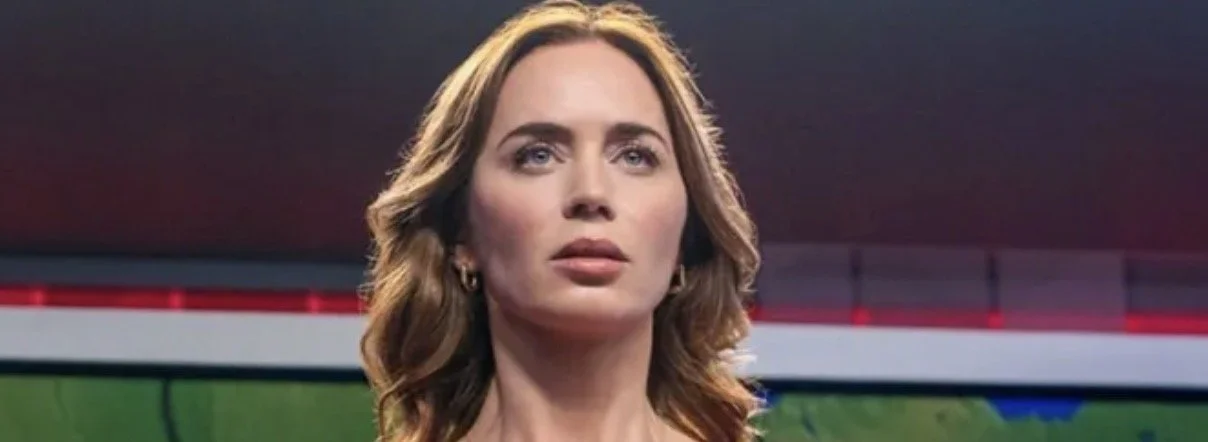
“Disclosure Day” is built around a simple idea: for 79 years, the government has been concealing what it knows about UFOs and extraterrestrial life, and a whistleblower — as played by Josh O’Connor — sets out to expose it all to the public. The story runs on two tracks at first. I was mostly engaged by both. Emily Blunt plays Margaret Fairchild, a meteorologist noticing these strange atmospheric shifts. O’Connor is Daniel Kellner, a cybersecurity whistleblower who’s basically on the run after pulling government files that point toward UFOs. Colin Firth is in the background, all pent-up pressure and control, trying to keep everything buried by sheer force.
The camera doesn’t sit still. Every shot is doing something. Faces, reactions, brilliant close-ups. The first half is a masterclass of Spielbergian tension.
John Williams’s music actually keeps things restrained for most of it, which I liked. Then the ending swells a bit too hard for me, like it’s pushing emotion instead of letting it build naturally. Emily Blunt, an indelibly great actress, is phenomenal here. She carries this film, probably more than she should have to. Some of the facial expressions she delivers here, seeded with deep emotional depth, are damn-near cathartic.
Then it starts to slip for me.
The film’s central mystery is revealed, and it gets more explanatory. More literal. Less mysterious. The wonder kind of fades out, and what’s left feels more conventional than I expected. I kept thinking there’s a version of this story that leans into something bigger. Koepp, who wrote the script, and Spielberg fail to tackle belief, religion, and how people react when they’re faced with something truly beyond them. “Disclosure Day” plays it much safer, and veers into silly territory. Koepp’s script juggles too much at once. Spielberg makes it all watchable, but it’s still very uneven in a way I couldn’t ignore.
By the end, I wasn’t sure it became what it was aiming for. I liked many parts of it a lot, but it also feels like something trying to recreate that old Spielberg magic more than actually finding its own. This film was a crushing disappointment, and not because it’s bad film — it isn’t — but because It could have been so much more.